
Every Shopify store owner dreams of more traffic. But what if your biggest growth opportunity isn’t attracting more visitors—it’s converting the ones you already have?
Many Shopify stores spend thousands on ads, SEO, and social media marketing, yet struggle to achieve sustainable growth. The reason is simple: visitors are arriving, but they’re not completing purchases.
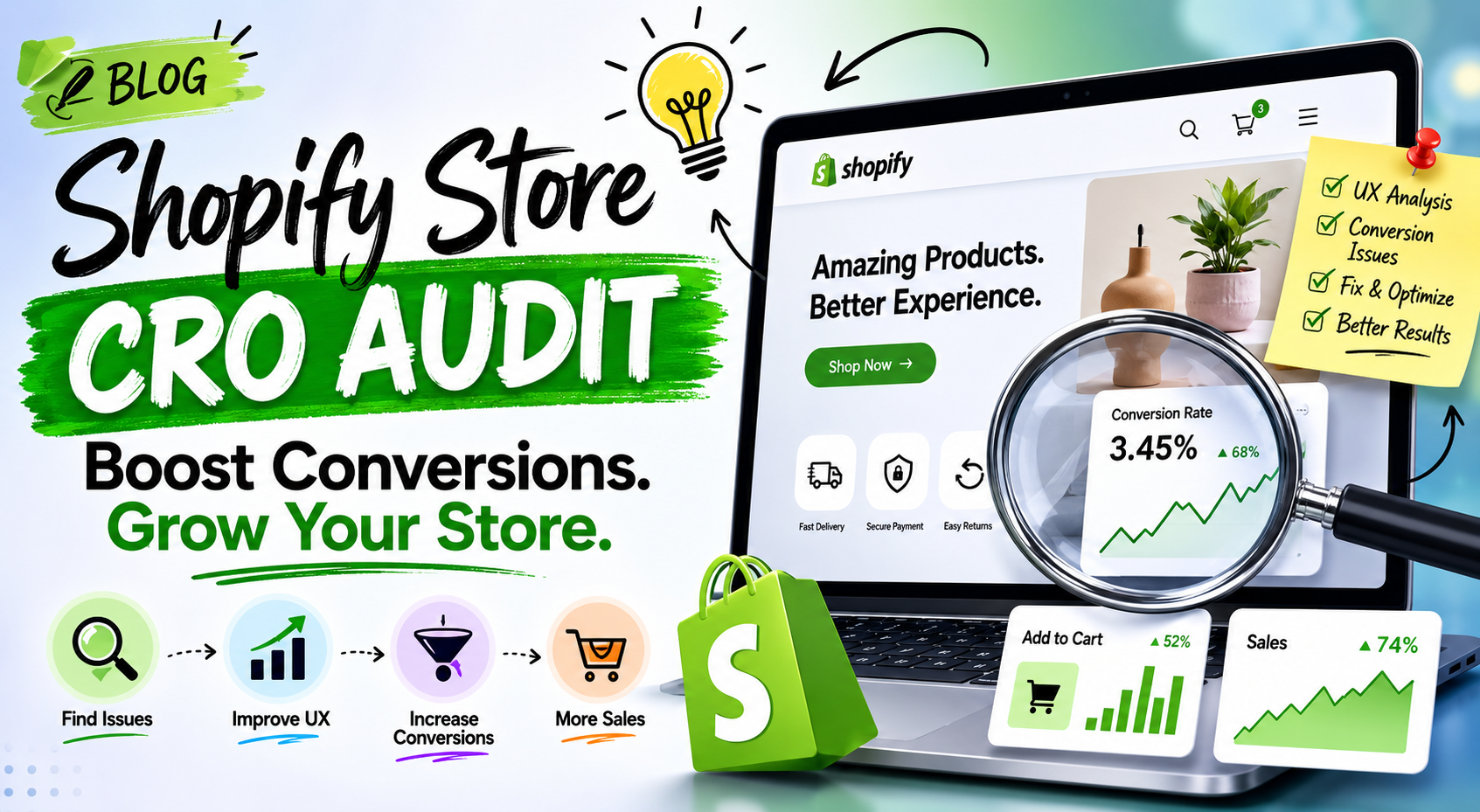
This is where a Shopify CRO (Conversion Rate Optimization) Audit becomes invaluable.
What Is a Shopify CRO Audit?
A Shopify CRO audit is a comprehensive analysis of your online store designed to identify friction points, usability issues, trust barriers, and conversion obstacles that prevent visitors from becoming customers.
Think of it as a health checkup for your store.
Instead of guessing why customers abandon their carts or leave your website, a CRO audit uses data, user behavior, and proven eCommerce principles to uncover what’s hurting your conversions.
The goal isn’t just more sales—it’s maximizing revenue from your existing traffic.
Why Most Shopify Stores Need a CRO Audit
Store owners often assume poor sales are caused by:
- Low traffic
- Weak products
- High competition
- Expensive advertising
While these factors can contribute, many stores lose customers due to avoidable user experience issues.
Common examples include:
- Slow-loading pages
- Confusing navigation
- Weak product descriptions
- Lack of trust signals
- Complicated checkout flows
- Mobile usability problems
- Poor call-to-action placement
Even small improvements in these areas can significantly increase conversion rates and average order value.
Key Areas Reviewed During a Shopify CRO Audit
1. Homepage Experience
Your homepage has only a few seconds to communicate value.
A CRO audit evaluates:
- Clear value proposition
- Visual hierarchy
- Navigation structure
- Promotional messaging
- Collection accessibility
- Trust indicators
Visitors should immediately understand what you sell and why they should buy from you.
2. Collection Pages
Collection pages often receive substantial traffic from search engines and advertisements.
An audit examines:
- Product filtering options
- Sorting functionality
- Product image quality
- Collection descriptions
- Mobile usability
- Product card optimization
The easier products are to discover, the higher the chances of conversion.
3. Product Pages
Product pages are where buying decisions happen.
Key CRO checkpoints include:
Product Images
- High-resolution images
- Lifestyle photography
- Zoom functionality
- Multiple viewing angles
Product Descriptions
- Benefits-focused copy
- Clear specifications
- FAQs
- Objection handling
Conversion Elements
- Add-to-cart button visibility
- Trust badges
- Shipping information
- Return policies
- Customer reviews
Every unanswered question increases the likelihood of abandonment.
4. Mobile Optimization
More than half of Shopify traffic typically comes from mobile devices.
A CRO audit investigates:
- Mobile page speed
- Thumb-friendly navigation
- Button placement
- Checkout usability
- Content readability
If your store isn’t optimized for mobile users, you’re likely losing a substantial percentage of potential customers.
5. Checkout Process
Cart abandonment remains one of the biggest challenges in eCommerce.
During a CRO audit, we analyze:
- Checkout steps
- Guest checkout availability
- Payment options
- Shipping transparency
- Error handling
- Coupon code experience
The objective is simple: reduce friction and make purchasing effortless.
6. Site Speed & Performance
Research consistently shows that even a one-second delay can impact conversions.
A Shopify speed audit reviews:
- Image optimization
- App performance
- Theme efficiency
- JavaScript loading
- Core Web Vitals
Fast websites create better user experiences and higher conversion rates.
7. Trust & Credibility Signals
Online shoppers buy from stores they trust.
A CRO audit assesses:
- Customer reviews
- Security badges
- Return policies
- Contact information
- Social proof
- Brand storytelling
Trust isn’t built through design alone—it must be reinforced throughout the customer journey.
Data Sources Used During a CRO Audit
A professional Shopify CRO audit combines multiple data points, including:
Google Analytics
Understand traffic behavior, bounce rates, and conversion funnels.
Heatmaps
Visualize where users click, scroll, and interact.
Session Recordings
Observe real customer behavior and friction points.
Shopify Analytics
Identify best-selling products, drop-off points, and customer trends.
User Testing
Gather direct feedback from real users.
Together, these insights reveal what customers are experiencing—not what store owners assume they’re experiencing.
Quick CRO Wins You Can Implement Today
While a complete audit provides the best results, here are some immediate improvements:
✅ Add customer reviews to product pages
✅ Improve product image quality
✅ Display shipping information above the fold
✅ Simplify navigation menus
✅ Make CTA buttons more prominent
✅ Reduce unnecessary checkout steps
✅ Optimize images for faster loading
✅ Add FAQ sections to product pages
✅ Improve mobile responsiveness
✅ Showcase trust badges and guarantees
These small adjustments often produce noticeable conversion improvements.
How Often Should You Perform a CRO Audit?
A Shopify store should ideally undergo a CRO audit:
- Every 6–12 months
- After a major redesign
- Before scaling advertising campaigns
- When conversion rates decline
- After launching new products
Conversion optimization is an ongoing process, not a one-time task.
Final Thoughts
Most Shopify stores don’t have a traffic problem—they have a conversion problem.
Before increasing your advertising budget or investing in additional marketing channels, take a close look at how visitors interact with your store.
A thorough Shopify CRO audit uncovers hidden obstacles, improves customer experience, and helps turn more visitors into paying customers.
The result?
Higher conversion rates, increased revenue, and better returns from every marketing dollar you spend.
If you’re serious about growing your Shopify business, a CRO audit may be the highest-ROI investment you make this year.